
[Live Podcast] Environmental Citizens Suits and SEPs: Do Constitutional and Nondelegation Concerns Outweigh Environmental Benefits?

August 26, 2020 at 1:00 PM ET
Dial 888-752-3232 at 1:00 PM ET to join.
Environmental laws such as the Clean Air Act allow private plaintiffs and environmental advocacy groups to file citizens suits alongside the government’s environmental enforcement actions against polluters. The Environmental and Natural Resources Division of the Department of Justice is now pushing to end the practice in a federal case involving DTE Energy, Michigan’s largest electrical utility and a major operator of natural gas pipelines. The Sierra Club intervened on the government’s side and is seeking court approval of a side agreement in which DTE would close three coal plants, in addition to the penalties and mitigation secured by the Justice Department.
Such Supplemental Environmental Projects (or “SEPs”) are supposed to supplement the government’s enforcement actions. But critics — and now DOJ — argue that SEPs often supplant the penalty that the government has sought in its enforcement action. Such provisions, critics say, amount to a delegation of a core executive function that the Constitution vests in the president. It allows private advocacy groups to override the government’s enforcement priorities with their own, and then profit from coercive use of penalties that arise under environmental protection laws, the faithful execution of which is entrusted to the president and to the officials under his control. Critics say that any citizen suit claims arising under federal environmental laws that also give rise to enforcement actions should be extinguished when the enforcement action is resolved.
To the extent advocacy groups induce private companies to agree to such SEPs by promising to give up on claims arising under federal environmental laws subject to federal enforcement, should the practice of SEP’s be viewed as an unconstitutional infringement on a core executive function? Should the government’s ability to extinguish such private claims be viewed as a taking?
Speakers
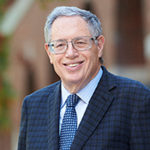
Laurence A. Tisch Professor of Law and Director, Classical Liberal Institute
New York University School of Law

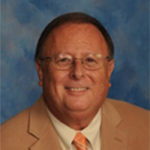
Professor Emeritus of Law and C. William Trout Senior Fellow in Public Interest Law
Shepard Broad College of Law, Nova Southeastern University
Moderator

Professor, Florida International University; Senior Fellow in Law, Economics, and Technology
The Heritage Foundation
The Federalist Society and Regulatory Transparency Project take no position on particular legal or public policy matters. All expressions of opinion are those of the speaker(s). To join the debate, please email us at [email protected].